Could Germany's footballing supremacy destabilize an already uneasy Europe?
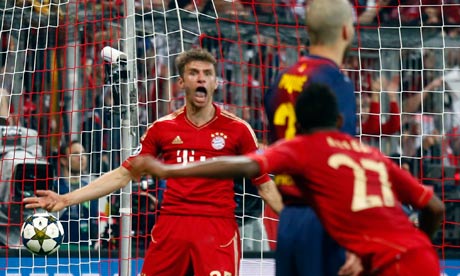 |
| Source Guadrian.co.uk |
The consensus is far from clear among experts because it is difficult to extrapolate from just one year of results, but clearly the rest of Europe is uneasy (However this is Munich's 3rd final in 4 years).
Germany has long been a footballing power but the geopolitical context of Germany's footballing rise is clearly unique in recent history.
Most Europeans will be looking on with resentment whoever prevails because Germans are imposing their will on the rest of Europe in a way not seen since WWII. The rise of Germany's economic dominance has been in many respects the most surprising aspect of the Eurozone debt crisis as country after country come cap-in-hand to the Germany treasury.
The European Union was designed in post-WWII Europe for the purpose of keeping historic German dominance in check. Up until the Global Financial Crisis in 2008, Germany was content writing checks to the EU and while exercising little political influence. The EU was a partnership between France and Germany with all major EU members playing a role.
Today reflects a new reality with Germany dictating terms almost unilaterally to its financially-strapped neighbors. Whatever shape the EU takes going forward, it will clearly be a German vision with France, Italy & Spain taking a muted role. Popular frustration has already erupted in Greece due to German imposed policies but this has yet to spread widely across Europe.
While the European Debt Crisis has taken a reprieve this year, the worst of the crisis is far from over and more financial pain is on the horizon. In the face of future austerity measures, the million dollar question is whether the rest of Europe's resentment of Germany's new found powers will finally boil over.
Which raises the question of the role of football in European politics. Will next season bring similar Champions League success for Germany? Bayern Munich's current dominance shows no signs of letting up after this season and the transfer period shows promising signs of attracting new talent. The German National Team continues to develop its strong core of young players and is an early favorite to win next year's World Cup in Brazil.
Combine Munich's potential with a German National Team 2014 World Cup title and you have a recipe for a destabilizing political force.
There is no sport in the world that possesses the level of interest and passion of football. Is there another sport that spurs the frequent violence and riots on the level football does?
Success in football is a powerful symbol of national pride and to many Europeans a referendum on the ability of country's culture produce success. How a country plays football is often a reflection of its cultural values and plays to commonly held stereotypes. The Spanish with their impulsive play and emphasis on style and flair. Italians lacking offensive ambition that specializes in defense and flopping theatrics. Germans consistently reinventing their style and aggressive attacking mentality, etc. Inherently these cultural reflections have economic undertones as Germany has pursued an export oriented economy while the rest of Europe has been content to languish in past successes.
Germany has already shown the superiority of its economic model that has badly outpaced its fellow European economies.
But if its culture brings football success and further advances a narrative of growing German dominance, it effectively would humiliate the rest of Europe and serve as powerful symbol to an already beleaguered continent. In 2010 with its economy in shambles, at least Spain could celebrate its footballing success with a World Cup title and symbolic validation of their nation's worth with a victory over Germany on the pitch.
If 2014 brings a different story, look for the Euro crisis to enter a new phase. It is conceivable to envision a scenario where Germany wins a second consecutive Champions League title and the World Cup, and in doing so creates a powerful anti-German backlash from the rest of Europe that brings about the ultimate demise of the Euro and EU-- perhaps serving as the catalyst for the proverbial straw that broke the camel's back.
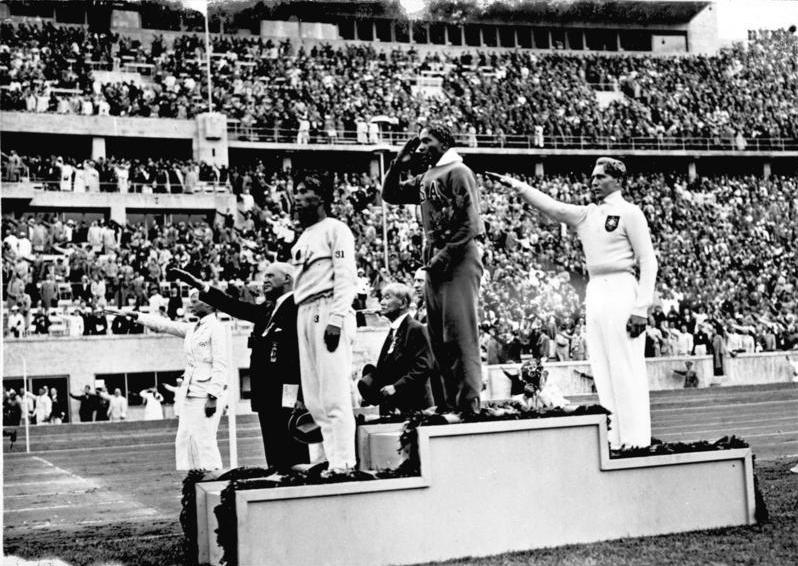
It would not be the first time that German sports has had strong geopolitical overtones during a time of its power rising. However, Jesse Owens extinguished the flames of that dream in 1936.
Politics touches every aspect of our lives, but will sports play a role in deciding Europe's fate?

One could just as well make the opposite argument, that sporting success validates the larger German model. In sports, when a team has continued success, the others will try to learn from them. This is exactly what the struggling european countries need to do in their economic and political policies, and maybe football will help them see it.
ReplyDelete